EISCAT logotype
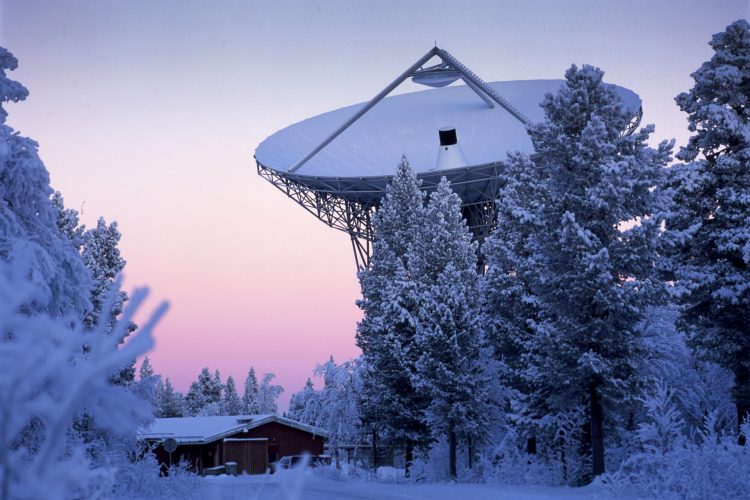
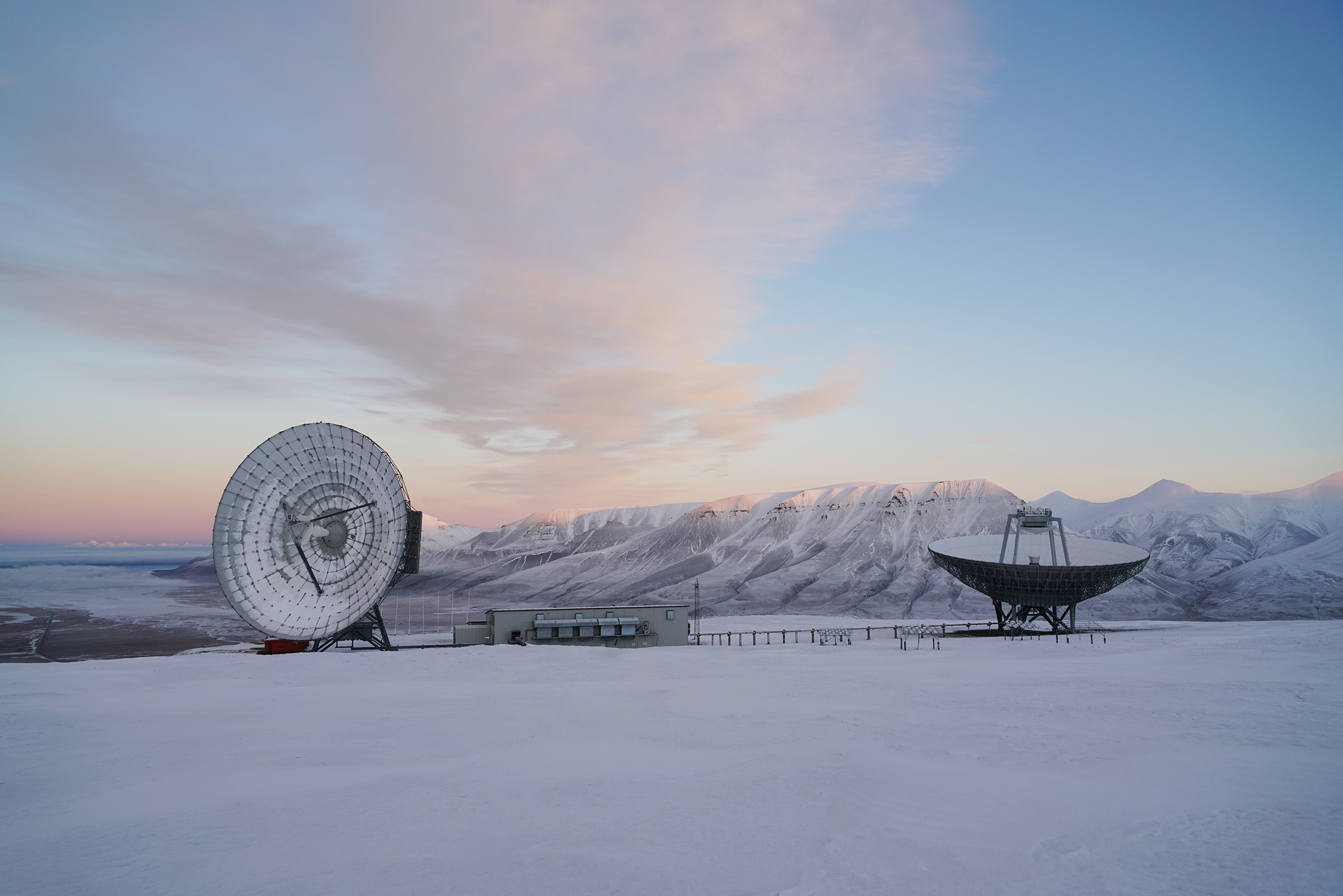
EISCAT Svalbard Radar with pink winter skies.

Celebrating 30 Years of the EISCAT Svalbard Radar

On 22 August 1996, the EISCAT Svalbard Radar (ESR) was officially inaugurated, marking a significant milestone in the history of atmospheric and space science research. Located in Longyearbyen, Svalbard, the ESR was designed to complement the existing EISCAT radar systems in mainland Scandinavia, extending their observational capabilities into the polar cap region. The decision to develop the ESR was made by the EISCAT Council in 1990, and feasibility studies began shortly thereafter, culminating in the start of construction at the end of 1992 under the leadership of Director Jürgen Röttger.

A Valuable Addition to EISCAT

The ESR brought unique capabilities to the EISCAT Scientific Association. As the first incoherent scatter radar system operating at such high latitudes, it enabled scientists to study the Earth’s upper atmosphere and ionosphere in unprecedented detail. Its strategic location in the Arctic allowed for continuous observations of the auroral zone and polar cap, regions critical for understanding space weather and its impact on our planet.

Over the past three decades, the ESR has played a pivotal role in numerous groundbreaking discoveries. It has contributed to our understanding of atmospheric dynamics, ionospheric plasma physics, and the interactions between the Earth’s atmosphere and the solar wind. The radar’s ability to operate in both common and field-aligned modes has made it an indispensable tool for researchers worldwide.

Concrete Contributions to Popular Science

ESR has been instrumental in improving space weather forecasting. By monitoring the ionosphere and tracking disturbances caused by solar activity, the radar provides critical data that helps predict space weather events. These events can affect satellite operations, communication systems, and even power grids on Earth, making the ESR’s contributions vital for both scientific and practical applications.

Continued Importance

Today, the EISCAT Svalbard Radar remains at the forefront of atmospheric and space science. Its data continues to inform and inspire new generations of scientists, ensuring that EISCAT maintains its position as a leader in the field. The ESR’s contributions have been instrumental in advancing our knowledge of the near-Earth space environment, supporting both fundamental research and practical applications, such as improving the accuracy of space weather forecasts.

Looking Ahead

EISCAT is a state-owned company owned by Sweden, Norway and Finland, with member institutions in several countries. The organisation’s radar stations are strategically located to study the atmosphere and ionosphere over the Arctic and play a key role in understanding space weather and its impact on modern technology.
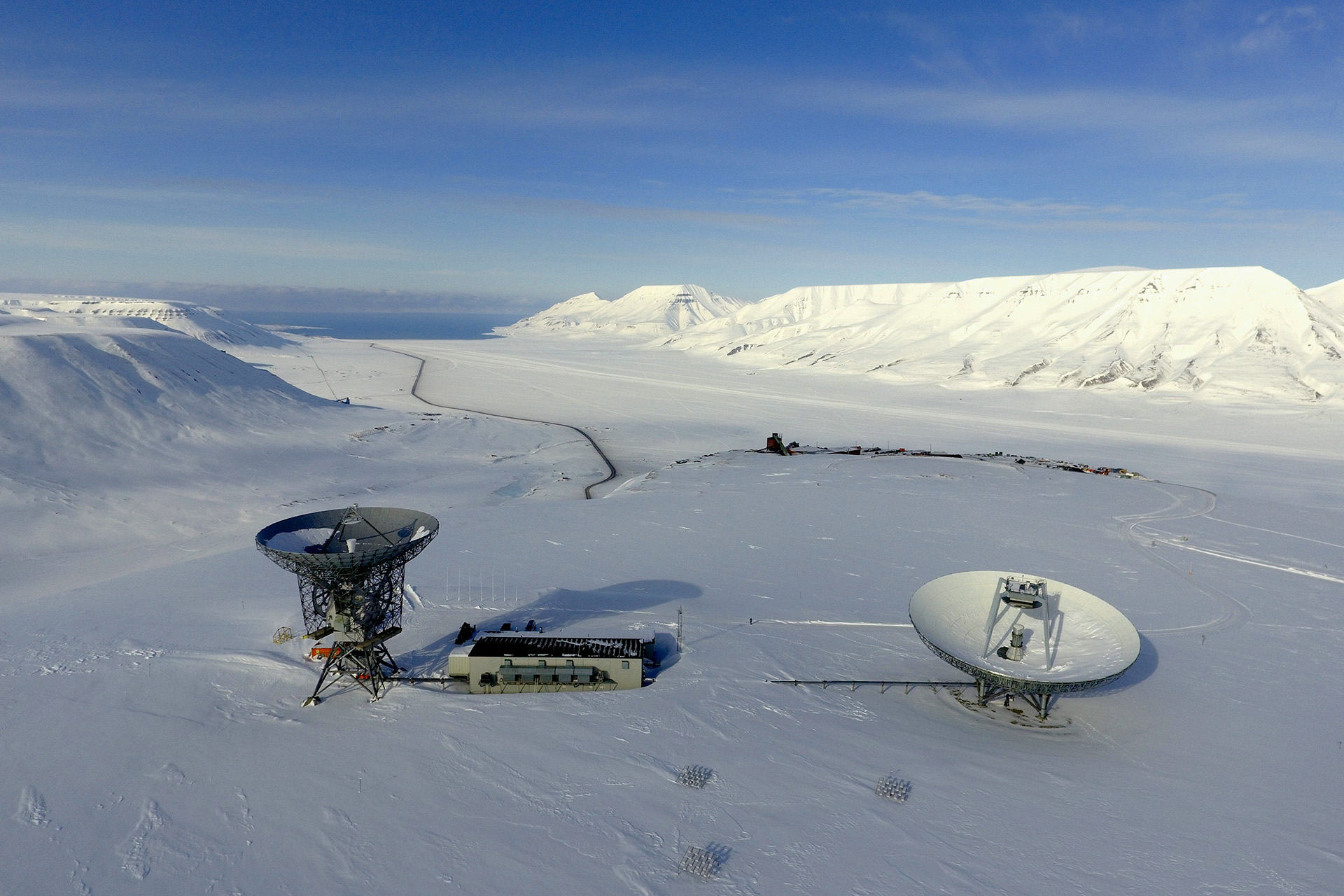
EISCAT Svalbard Radar with the Adventfjorden and the snowy mountains of Svalbard in the background.

EISCAT Svalbard Radar with the Adventfjorden and the snowy mountains of Svalbard in the background.

Photo: Craig Heinselman, EISCAT AB
Svalbard fly over

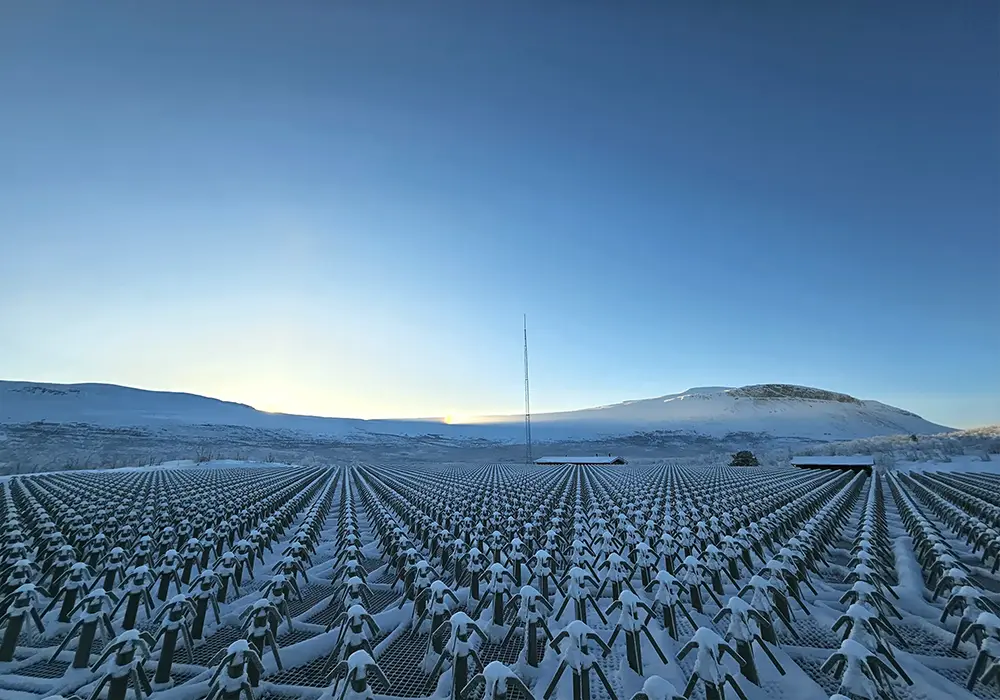
Image of the EISCAT_3D antenna plane with the site building in te background.

The EISCAT Symposium 2026 brings together world-leading researchers in Kiruna

The 22nd International EISCAT Symposium will be held on 24–28 August 2026 at the Space Campus in Kiruna. The symposium brings together leading researchers in atmospheric and space science to present and discuss the latest research on space weather, the atmosphere and the ionosphere. The event is jointly organised by EISCAT and the Swedish Institute of Space Physics (IRF).

50 years of data for research into various space phenomena

EISCAT was founded in December 1975 and, over the course of five decades, has contributed to groundbreaking research into near-Earth space and its impact on society.

In 2003, a powerful geomagnetic storm, or solar storm, occurred: the Halloween storm. The intense solar activity caused disruptions to the Swedish electricity grid and led to widespread power cuts in the Malmö region. Around 50,000 households were affected, fire alarms were triggered, train services were delayed and the emergency services had to be called out to rescue people trapped in lifts.

Research into the ionosphere, the atmosphere and space weather over the Arctic helps scientists to understand, predict and reduce the risks of similar disruptions to future electricity grids, satellite systems and communications. EISCAT’s data contributes to the development of better models and warning systems, making society better equipped to deal with similar events in the future – as was also demonstrated during the major solar storm of 2024, when spectacular northern lights could be seen across the whole of Sweden. On that occasion, there were no power cuts, but several electricity network operators and authorities went on high alert, and air traffic, satellites and navigation systems were monitored with particular care. These threats remain highly relevant today, but thanks to the research that EISCAT can contribute to, we are better equipped to deal with them.

Anniversary programme and the Beynon Medal

The symposium begins on Monday 24 August. On Wednesday, EISCAT’s 50th anniversary will be marked with a special programme on the organisation’s history and the presentation of the Beynon Medal, which is awarded to individuals who have made particularly significant contributions to EISCAT’s activities and development.

The symposium concludes on Friday 28 August.

What is EISCAT?

EISCAT’s mission is to provide research radar facilities for the study of the lower, middle and upper atmosphere, as well as the ionosphere, using incoherent scatter radar technology, the most powerful ground-based method for this research.

The organisation operates several high-performance radar stations in Northern Scandinavia and on Svalbard. In addition, construction is underway on EISCAT_3D, a new generation multistatic radar with antenna arrays in northern Finland, Norway and Sweden, the most advanced incoherent scatter radar in the world.

About EISCAT

EISCAT is a state-owned company owned by Sweden, Norway and Finland, with member institutions in several countries. The organisation’s radar stations are strategically located to study the atmosphere and ionosphere over the Arctic and play a key role in understanding space weather and its impact on modern technology.

Download the full press release below.

Media contact

For interviews, photos or further information, please contact:

Johan Svensson

Project leader / Acting media contact

EISCAT AB

+46 72 244 10 45

The old Kiruna antenna, now decommissioned.

The old Kiruna antenna, now decommissioned.

Photo: Lars-Göran Vanhaninen

Image of the EISCAT_3D antenna plane with the site building in te background.

Dipole antennas at the EISCAT_3D site in Kaiseniemi, Sweden.

Photo: Johan Svensson, EISCAT AB

E-mail problems

EISCAT has recently made a big IT migration where the e-mail server was changed. This may cause problems with sending e-mails to us sometimes. This should not affect direct messages, but can affect lists och service addresses.

If you have a bouncing e-mail, please use the contact form on this website instead: Contact EISCAT

EISCAT Peer-Review Programme – Deadline postponed

The standard deadline (1 May 2026) for EISCAT Peer-Reivew Programme applications has been postponed until further notice.

The next application deadline for the EISCAT Peer-Review Programme will instead be decided by the EISCAT Scientific Advisory Committee during the summer months of 2026.

For further information please contact: Mária Tjulin (maria.tjulin@eiscat.se).