The 22nd International EISCAT Symposium will be held on 24–28 August 2026 at the Space Campus in Kiruna. The symposium brings together leading researchers in atmospheric and space science to present and discuss the latest research on space weather, the atmosphere and the ionosphere. The event is jointly organised by EISCAT and the Swedish Institute of Space Physics (IRF).
50 years of data for research into various space phenomena
EISCAT was founded in December 1975 and, over the course of five decades, has contributed to groundbreaking research into near-Earth space and its impact on society.
In 2003, a powerful geomagnetic storm, or solar storm, occurred: the Halloween storm. The intense solar activity caused disruptions to the Swedish electricity grid and led to widespread power cuts in the Malmö region. Around 50,000 households were affected, fire alarms were triggered, train services were delayed and the emergency services had to be called out to rescue people trapped in lifts.
Research into the ionosphere, the atmosphere and space weather over the Arctic helps scientists to understand, predict and reduce the risks of similar disruptions to future electricity grids, satellite systems and communications. EISCAT’s data contributes to the development of better models and warning systems, making society better equipped to deal with similar events in the future – as was also demonstrated during the major solar storm of 2024, when spectacular northern lights could be seen across the whole of Sweden. On that occasion, there were no power cuts, but several electricity network operators and authorities went on high alert, and air traffic, satellites and navigation systems were monitored with particular care. These threats remain highly relevant today, but thanks to the research that EISCAT can contribute to, we are better equipped to deal with them.
Anniversary programme and the Beynon Medal
The symposium begins on Monday 24 August. On Wednesday, EISCAT’s 50th anniversary will be marked with a special programme on the organisation’s history and the presentation of the Beynon Medal, which is awarded to individuals who have made particularly significant contributions to EISCAT’s activities and development.
The symposium concludes on Friday 28 August.
What is EISCAT?
EISCAT’s mission is to provide research radar facilities for the study of the lower, middle and upper atmosphere, as well as the ionosphere, using incoherent scatter radar technology, the most powerful ground-based method for this research.
The organisation operates several high-performance radar stations in Northern Scandinavia and on Svalbard. In addition, construction is underway on EISCAT_3D, a new generation multistatic radar with antenna arrays in northern Finland, Norway and Sweden, the most advanced incoherent scatter radar in the world.
About EISCAT
EISCAT is a state-owned company owned by Sweden, Norway and Finland, with member institutions in several countries. The organisation’s radar stations are strategically located to study the atmosphere and ionosphere over the Arctic and play a key role in understanding space weather and its impact on modern technology.
Download the full press release below.
The 22nd International EISCAT Symposium 2026 brings together world-leading researchers in Kiruna 24-28 August. The week will contain presentations and discussions on different subjects related to EISCAT operations, such as space weather, radar techniques, space debris, aurora studies etc.
Media contact
For interviews, photos or further information, please contact:
Johan Svensson
Project leader / Acting media contact
EISCAT AB
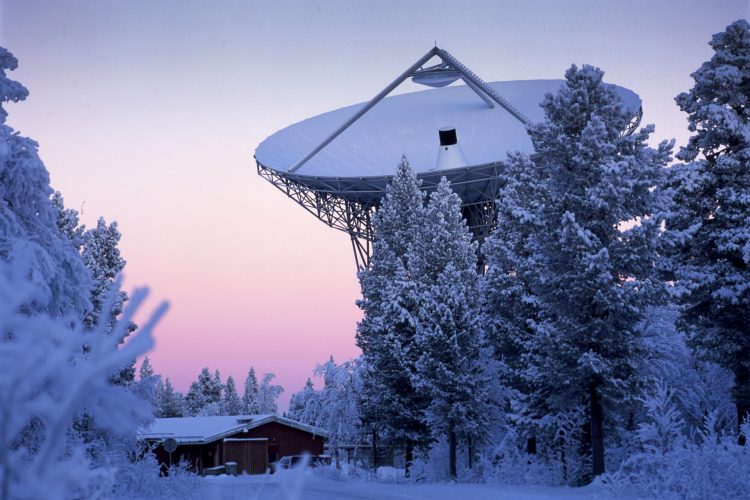
The old Kiruna antenna, now decommissioned.
Photo: Lars-Göran Vanhaninen
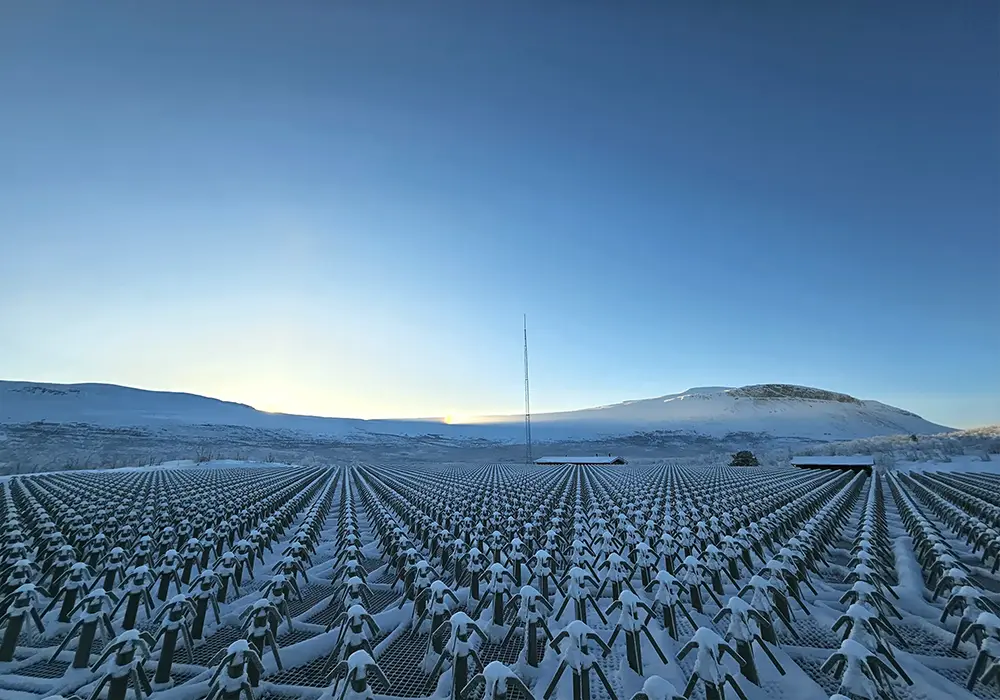
Dipole antennas at the EISCAT_3D site in Kaiseniemi, Sweden.
Photo: Johan Svensson, EISCAT AB