
EISCAT operates a network of unique research facilities in northern Fenno-Scandinavia and on Svalbard, strategically located to study space above our northern latitudes.
Here, researchers investigate how the sun affects the Earth’s upper atmosphere and space environment. Processes that can be important for satellites, GPS, radio communication and other critical technologies.
The established EISCAT facilities are located in Tromsø and Skibotn (Norway), Kaiseniemi (Sweden) and Karesuvanto (Finland). Together, these sites make it possible to track movements and changes in the ionosphere over large areas. EISCAT also operates a radar on Svalbard (Norway), located in one of the world’s most dynamic areas for auroras and space weather, providing particularly valuable observations of polar processes.
A next generation space radar
An important step into the future is EISCAT_3D, a new generation radar with sites in Skibotn, Karesuvanto and Kaiseniemi. Unlike previous systems, EISCAT_3D can observe entire volumes of the atmosphere simultaneously, providing a more detailed and three-dimensional picture of rapid and complex processes in the space environment. This opens up new opportunities for both basic research and applications related to space weather and technical systems.
Organisation and operation
EISCAT AB is responsible for the operation, maintenance and further development of all sites, and ensures that the facilities are available to researchers from around the world. Through long-term management, technical expertise and international cooperation, EISCAT creates the conditions for reliable measurements and continuous observations in the Arctic and sub-Arctic regions.
Together, EISCAT’s sites constitute a central resource for increasing our understanding of the space around Earth and its importance for both science and society.
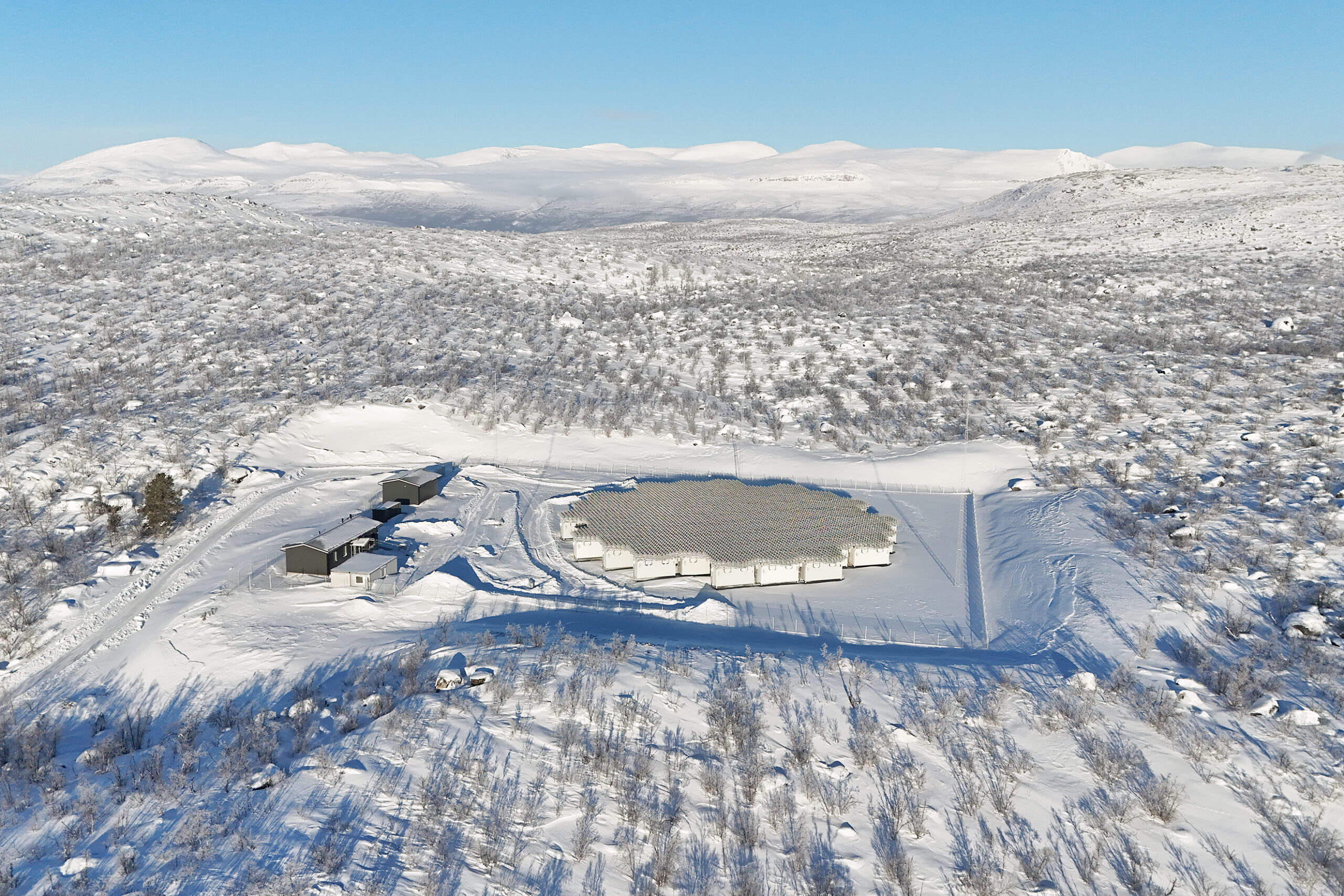
EISCAT_3D Kaiseniemi, one of the research radar stations in the new EISCAT_3D system.
Photo: Johan Svensson