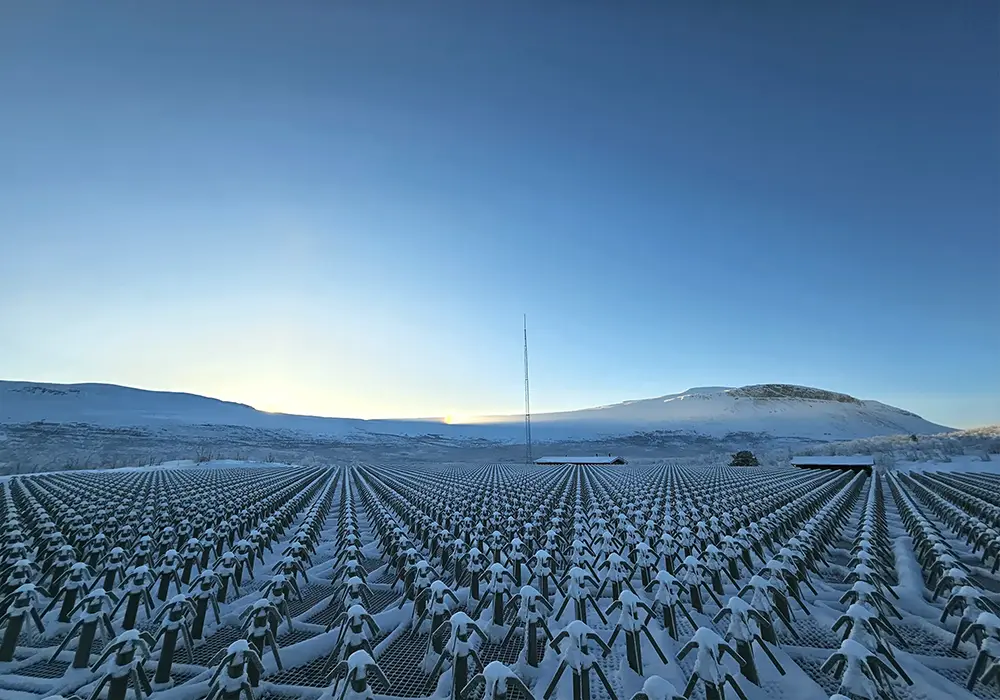
With tens of thousands of satellites and millions of fragments in orbit, monitoring space debris is becoming increasingly important. Even small debris can interfere with scientific measurements, including studies of the aurora borealis and the ionosphere. EISCAT_3D will be able to detect debris down to a few centimetres and determine trajectories from a single observation, significantly enhancing EISCAT’s capabilities in space situational awareness.
The project, led by Johan Kero and Daniel Kastinen at IRF, strengthens EISCAT’s role as a key European research infrastructure. It not only expands the radar’s scientific applications but also supports international collaborations such as EU SST and the development of future radar systems like NOSTRA.
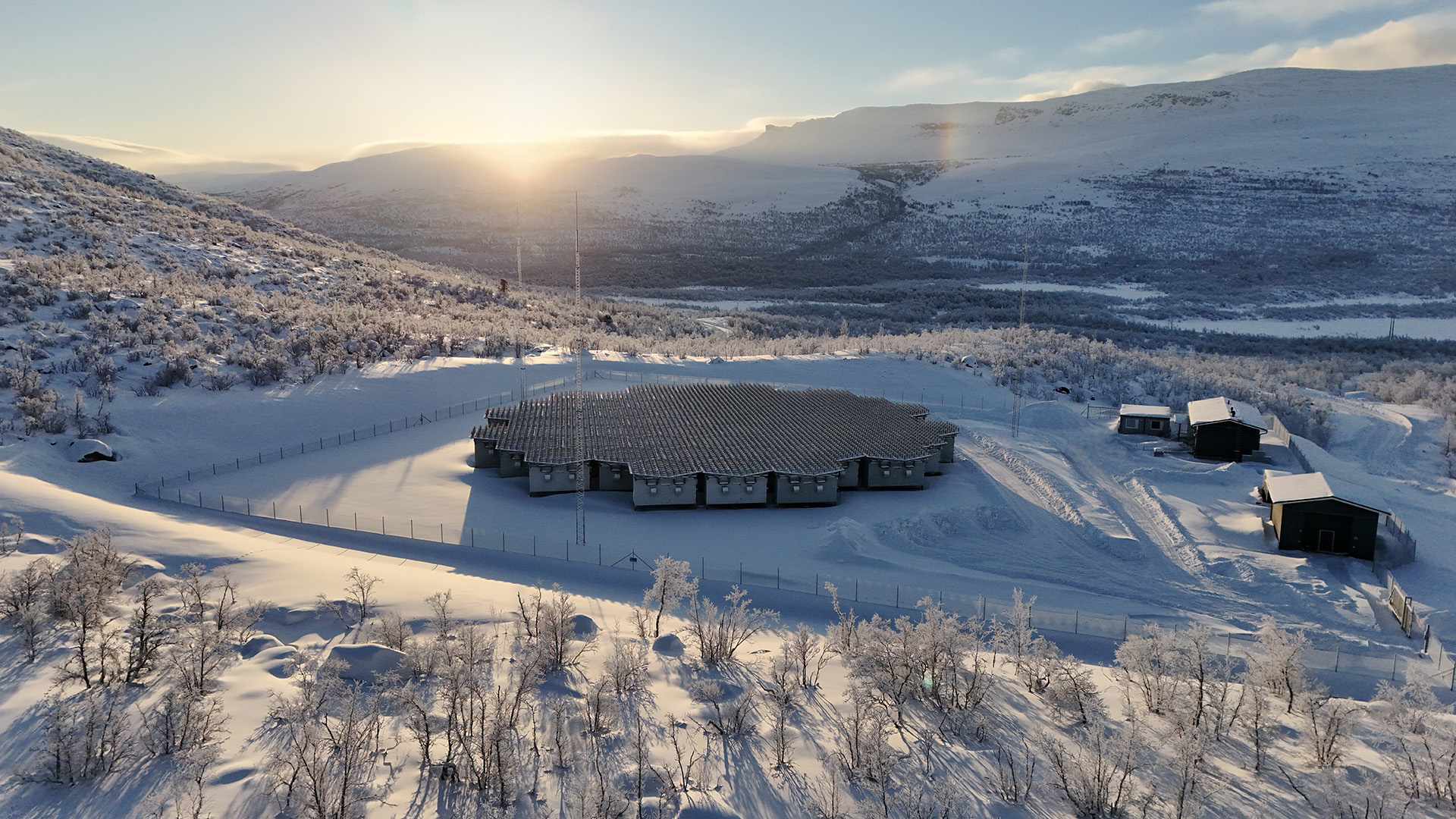
EISCAT_3D Kaiseniemi outside Kiruna, Sweden. One of the radars in the EISCAT_3D system that will be used to monitor space debris.
Photo: Johan Svensson