EISCAT logotype
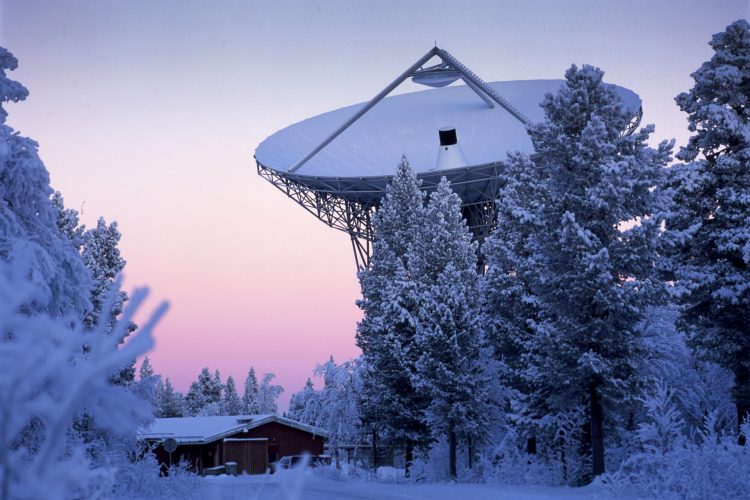
EISCAT_3D Skibotn in autum colours.

Algorithms engineer

About the Role

The focus of the role is mathematically oriented programming and the implementation of algorithms for the data processing pipeline.

EISCAT is currently collaborating with the Swedish Institute of Space Physics (IRF) to develop methods to more accurately measure the orbital parameters of known hard targets, including compensation for wave propagation through the atmosphere. Part of this position at EISCAT is to integrate these algorithms into our current analysis package. It is expected that the work will also include working on the new data analysis pipeline as well as working on development of other parts of the system software.

The position is focused on implementing mathematical algorithms and data processing. The candidate should ideally have a good foundation in both mathematics and signal processing, be comfortable working with
older codebases and have experience writing high performance code.

EISCAT_3D is expected to be in operation for decades, so we are looking for candidates with a long term view and an interest in radar or radio technology. The team is spread across multiple locations and time zones, so candidates should have good communication skills and be comfortable taking the initiative with their work.

Skills and experience

Required:

  • Documented experience in mathematics and signal processing
  • Documented experience in programming in two or more of C, Go, Python, and Rust
  • Experience implementing algorithms
  • EU work permit
  • Cat *B driving license
  • Proficient English language skills, both spoken and written

Beneficial:

  • Understanding of radars or experience with amateur radio.
  • Experience with Matlab for work with legacy code used at EISCAT
  • Proficiency working in a Linux environment

Personal qualities

We are looking for candidates with:

  • long-term perspective and a keen interest in radar or radio technology.
  • Strong communication skills and the ability to take initiative.
  • The ability to work both independently and as part of a team.

Location and work arrangements

The role is primarily based in Kiruna, Sweden. Remote work may be considered for exceptional candidates.

As part of the recruitment process, candidates will undergo security vetting which must be successfully completed prior to employment.

EISCAT AB is an international company with English as its working language.

Application process

Due to the upcoming holiday period, the closing date for applications is 28 August 2026. Applications will be processed continuously, and the position may be filled before the deadline.

Send your application, CV with covering letter, to: simon.brown@eiscat.se, marked with: “Algorithms engineer”
All applications must be submitted in English.

For administrative questions, please contact Simon Brown at simon.brown@eiscat.se.
For technical questions, please contact Esa Wikström at esa.wikstrom@eiscat.se.

EISCAT AB is an equal opportunity employer. We encourage applications from candidates of all backgrounds and are committed to creating a diverse and inclusive workplace.

EISCAT Radar school

International EISCAT Radar School 2026

International EISCAT Radar School
When: 17th – 21st August 2026
Where: Kilpisjärvi, Finland

The International EISCAT Radar School is a training course for new users of incoherent scatter radars at any stage of their research career. Participants should have a background in space physics, ionospheric pysics, plasma physics, or radar (radio science). The school will cover all essential aspects of the current incoherent scatter radar systems, including the science programme. An overview of the existing hardware and software was provided and future plans will be discussed, with an emphasis on phased array radars in preparation of EISCAT_3D.

The course will have a very strong emphasis on practicals, i.e. work in groups of participants on real data. There will be dedicated radar experiments for every group, and the groups will analyse their data and present their results under the guidance of an experienced team of instructors.

The radar school is organised by the Sodankylä Geophysical Observatory, the Space Physics and Astronomy Research Group (both University of Oulu), and EISCAT AB.

The radar school is part of the University of Arctic Thematic Network Arctic Space Hub.

The 22nd International EISCAT Symposium and the 49th Annual European Meeting on Atmospheric Studies by Optical Methods will take place after the Radar School, (more information here).

Registration

Please visit the registration page for more information.

Organisers:

Antti Kero
Sodankylä Geophysical Observatory

Thomas Ulich
EISCAT AB

EISCAT_3D User meeting

21st EISCAT_3D user meeting

The 21st EISCAT_3D user meeting will take place hybrid at IRF in Uppsala and Online
When: May 19-20, 2026.

Preliminary subjects of presentations/discussions are:

  • E3D data analyisis
  • a new GUISDAP and other tools
  •  Common Programmes
  •  Visualization

And more depending on your input and contributions.

We look forward to welcoming you to an interesting and rewarding meeting,
Stephan Buchert and Thomas Ulich

EISCAT Symposium

22nd EISCAT Symposium 2026

The registration is now open for the EISCAT Symposium 2026, 24–28 August.

Join researchers and experts in space and atmospheric physics for a week of scientific exchange and collaboration.

Registration deadline: 21 April
Register here: https://eiscat.se/eiscat-symposium-2026/

Sun the hydrogen bomb

Old information video about EISCAT_3D and the importance of learning more about the interactions between the sun and the Earth.

First published in 2011.

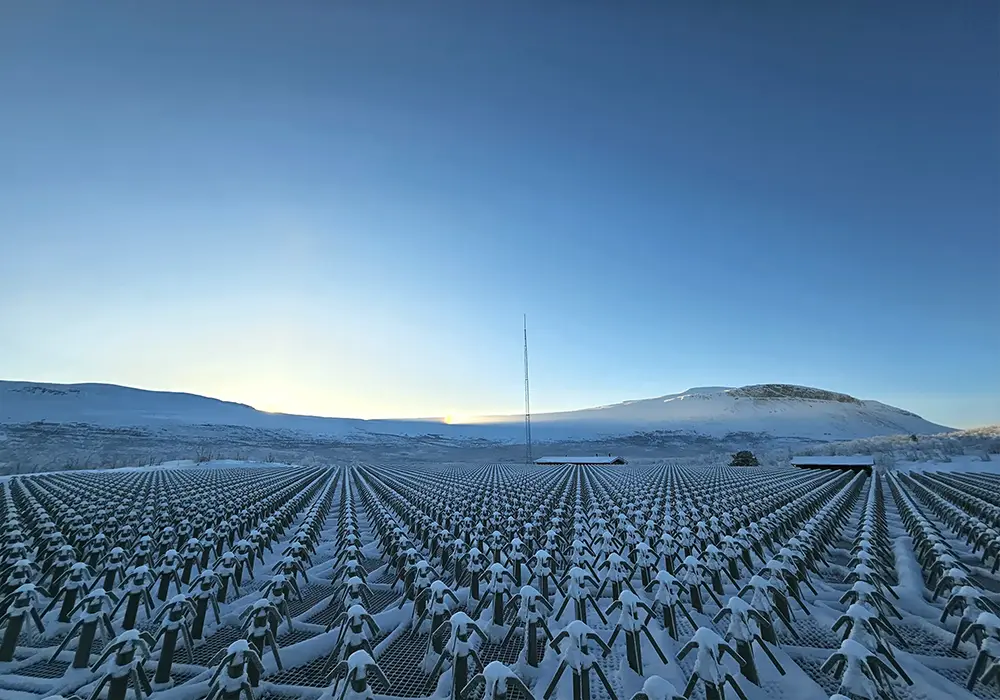
Image of the EISCAT_3D antenna plane with the site building in te background.

8 million SEK for development of space debris monitoring with EISCAT_3D

With tens of thousands of satellites and millions of fragments in orbit, monitoring space debris is becoming increasingly important. Even small debris can interfere with scientific measurements, including studies of the aurora borealis and the ionosphere. EISCAT_3D will be able to detect debris down to a few centimetres and determine trajectories from a single observation, significantly enhancing EISCAT’s capabilities in space situational awareness.

The project, led by Johan Kero and Daniel Kastinen at IRF, strengthens EISCAT’s role as a key European research infrastructure. It not only expands the radar’s scientific applications but also supports international collaborations such as EU SST and the development of future radar systems like NOSTRA.

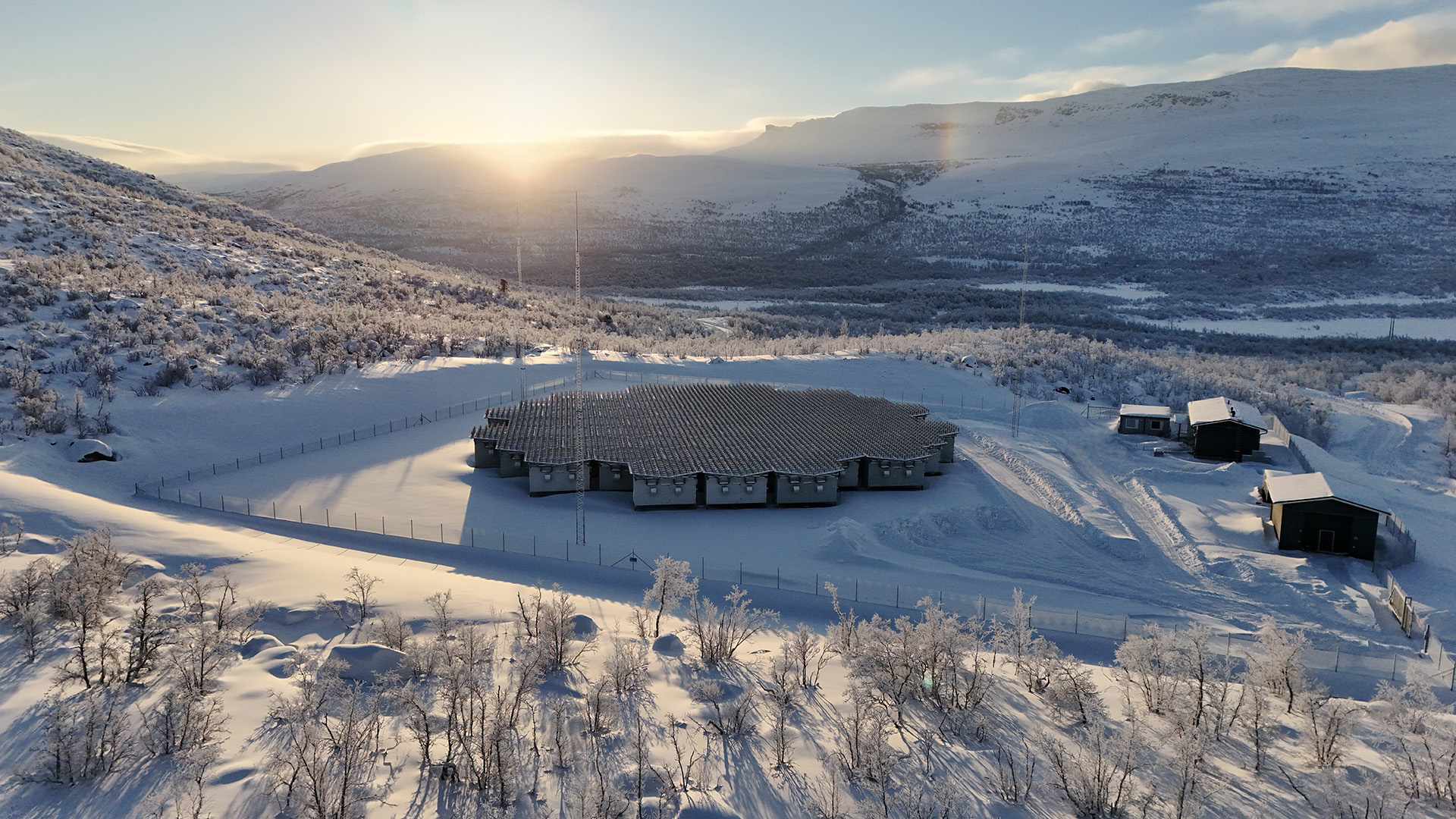
Scenic winter picture of one of EISCAT's advanced radar stations: EISCAT_3D, in Kaiseniemi, Sweden. The radar station is surrounded by Scandinavian mountains covered in snow.

EISCAT_3D Kaiseniemi outside Kiruna, Sweden. One of the radars in the EISCAT_3D system that will be used to monitor space debris.

Photo: Johan Svensson

New GUISDAP release

EISCAT releases a new version of GUISDAP.

GUISDAP is the main analysis package for the ionospheric EISCAT data, but parts can also be used for other types of analysis. It also contain extra tools like visualisation, calibration and vector calculation. With this version, support for phased array radar data, docker and packaging are introduced.

Please read the release notes for details.

EISCAT Symposium 2025

22nd International EISCAT Symposium 2025 & 49th Annual European Meeting on Atmospheric Studies by Optical Methods

The Symposium is moved to 22-24 August 2026. Read more here: EISCAT Symposium 2026


The 22nd International EISCAT Symposium will occur the 18th – 22nd August 2025 in Kiruna, Sweden. The symposium will be joint twith the 49th Annual European Meeting on Atmoshperic Studies by Optical Methods.

The meeting will be hosted jointly by EISCAT AB and the Swedish Institute for Space Physics (IRF) at the Kiruna Space Campus.

More information on this page: https://eiscat.se/eiscat-symposium-2025/