
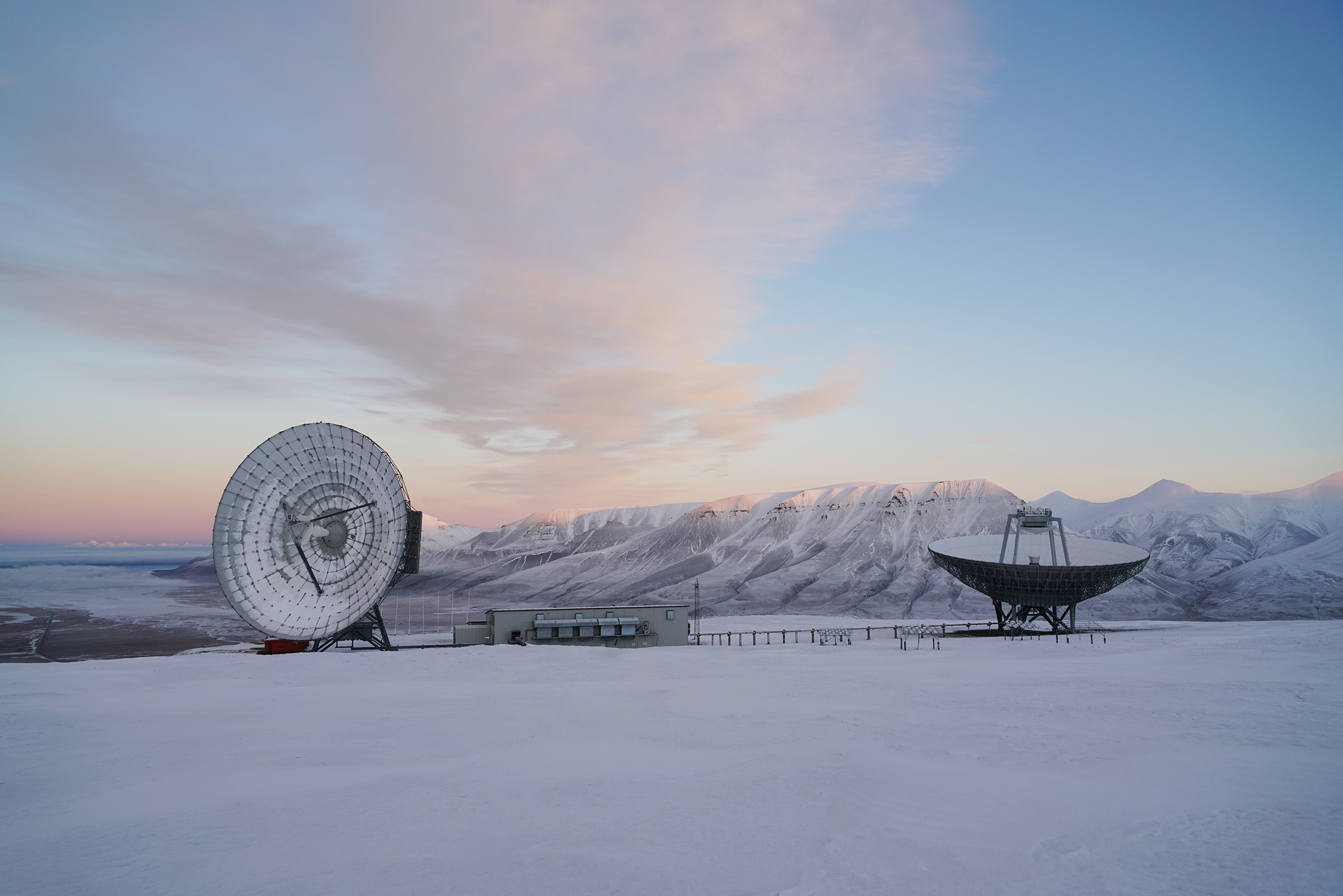
On 22 August 1996, the EISCAT Svalbard Radar (ESR) was officially inaugurated, marking a significant milestone in the history of atmospheric and space science research. Located in Longyearbyen, Svalbard, the ESR was designed to complement the existing EISCAT radar systems in mainland Scandinavia, extending their observational capabilities into the polar cap region. The decision to develop the ESR was made by the EISCAT Council in 1990, and feasibility studies began shortly thereafter, culminating in the start of construction at the end of 1992 under the leadership of Director Jürgen Röttger.
A Valuable Addition to EISCAT
The ESR brought unique capabilities to the EISCAT Scientific Association. As the first incoherent scatter radar system operating at such high latitudes, it enabled scientists to study the Earth’s upper atmosphere and ionosphere in unprecedented detail. Its strategic location in the Arctic allowed for continuous observations of the auroral zone and polar cap, regions critical for understanding space weather and its impact on our planet.
Over the past three decades, the ESR has played a pivotal role in numerous groundbreaking discoveries. It has contributed to our understanding of atmospheric dynamics, ionospheric plasma physics, and the interactions between the Earth’s atmosphere and the solar wind. The radar’s ability to operate in both common and field-aligned modes has made it an indispensable tool for researchers worldwide.
Concrete Contributions to Popular Science
ESR has been instrumental in improving space weather forecasting. By monitoring the ionosphere and tracking disturbances caused by solar activity, the radar provides critical data that helps predict space weather events. These events can affect satellite operations, communication systems, and even power grids on Earth, making the ESR’s contributions vital for both scientific and practical applications.
Continued Importance
Today, the EISCAT Svalbard Radar remains at the forefront of atmospheric and space science. Its data continues to inform and inspire new generations of scientists, ensuring that EISCAT maintains its position as a leader in the field. The ESR’s contributions have been instrumental in advancing our knowledge of the near-Earth space environment, supporting both fundamental research and practical applications, such as improving the accuracy of space weather forecasts.
Looking Ahead
EISCAT is a state-owned company owned by Sweden, Norway and Finland, with member institutions in several countries. The organisation’s radar stations are strategically located to study the atmosphere and ionosphere over the Arctic and play a key role in understanding space weather and its impact on modern technology.
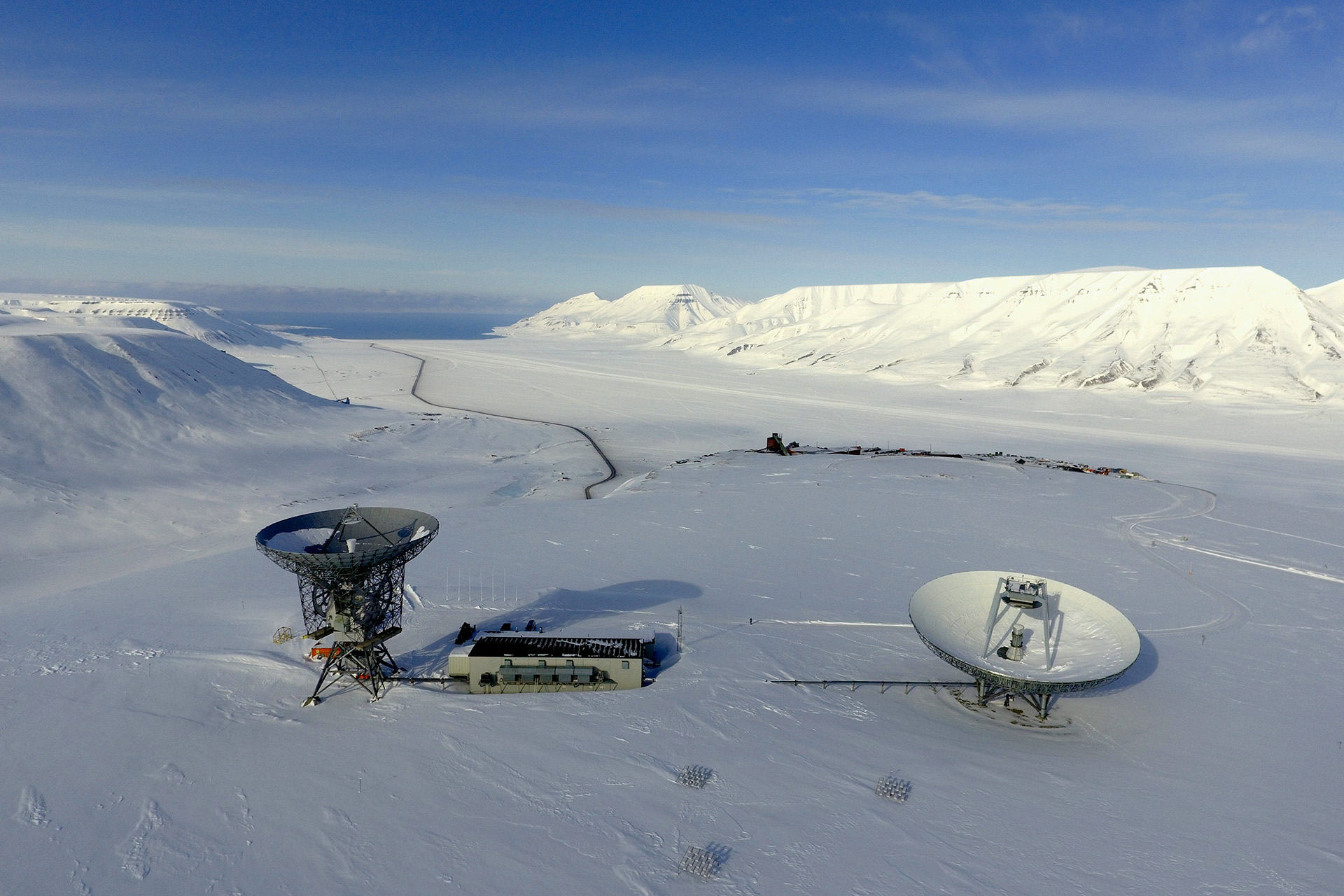
EISCAT Svalbard Radar with the Adventfjorden and the snowy mountains of Svalbard in the background.
Photo: Craig Heinselman, EISCAT AB